English vs Confidence: The aviation industry is one of the fastest-growing industries in the world. Every year, thousands of students dream of becoming cabin crew, ground staff, or aviation professionals. But one question always creates confusion:
Is English more important, or is confidence the real key to success in aviation careers?
English vs Confidence? Many students believe that without fluent English, they cannot succeed. Others think confidence alone is enough. The truth lies somewhere in between.
English vs Confidence? today, airlines are not just looking for people who can speak perfect English. They want professionals who can communicate clearly, handle pressure, and interact confidently with passengers.
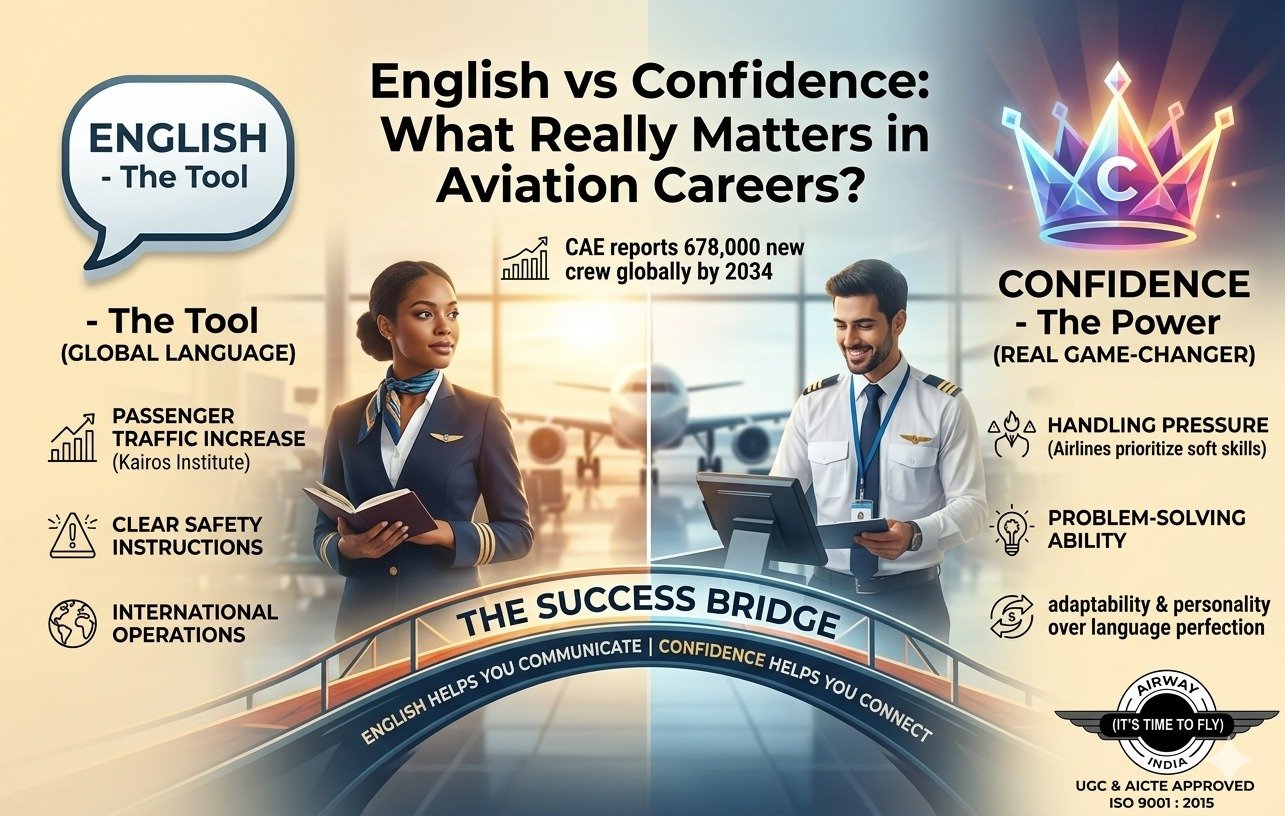
English vs Confidence? According to industry reports, the aviation sector will need around 678,000 new cabin crew members globally by 2034, showing massive career opportunities for students. (CAE)
Also, the industry is expected to require over 1.4 million professionals in the next decade, making aviation one of the most promising career fields. (CAE)
So, what matters more—English or confidence? Let’s understand deeply.
🧠 1. Why English Matters in Aviation Careers
English plays an important role in aviation because it is the global language of the aviation industry. Whether you are working as cabin crew, ground staff, or airport management, you will interact with people from different countries.
✈️ Why English is Important:
- It helps in clear communication with passengers
- It is used in training, safety instructions, and announcements
- It is the standard language in international aviation operations
- It improves your chances of working with international airlines
For example, when cabin crew give safety instructions, they must speak clearly so that passengers understand. Miscommunication can lead to serious issues.
However, here is the reality:
👉 Airlines do NOT expect perfect English.
👉 They expect understandable and clear communication.
Even in India, many successful aviation professionals started with basic English skills and improved over time.
💪 2. Why Confidence is the Real Game-Changer
Now let’s talk about confidence—the skill that truly sets candidates apart.
Confidence is not about speaking perfect English. It is about:
- How you present yourself
- How you handle situations
- How you communicate under pressure
In aviation, unexpected situations are common:
- Handling difficult passengers
- Managing emergencies
- Working in high-pressure environments
In such situations, confidence matters more than grammar.
✈️ Why Confidence is Crucial:
- Helps you stay calm under pressure
- Improves your body language and personality
- Makes you more approachable and professional
- Builds trust with passengers
Modern aviation recruitment has shifted its focus.
Today, airlines look for:
- Emotional intelligence
- Adaptability
- Teamwork
- Problem-solving ability
Not just language skills. (AbiLogic)
💬 Real Industry Trend:
English vs Confidence: Airlines now prioritize soft skills and personality over appearance or language perfection.
This means:
👉 A confident candidate with average English can perform better than
👉 A fluent English speaker with low confidence
💡 Example:
Imagine two candidates:
- Candidate A: Fluent English, but nervous
- Candidate B: Basic English, but confident
Most recruiters will choose Candidate B.
💡 Key Takeaway:
English vs Confidence: Confidence is what makes you stand out and get selected.
⚖️ 3. English vs Confidence: What Should You Focus On?
Now comes the most important question:
What should you focus on—English or confidence?
The answer is simple:
👉 You need BOTH—but confidence comes first.
🧩 The Right Balance:
- English = Tool
- Confidence = Power
English helps you communicate.
Confidence helps you connect.
✈️ What Airlines Really Want? English vs Confidence:
English vs Confidence: According to industry trends, aviation professionals must have:
- Clear communication
- Customer service skills
- Emotional intelligence
- Cultural awareness (Top Crew Aviation)
These are all confidence-based skills.
🧠 Smart Strategy for Students:
If you are planning an aviation career:
✔ Start improving your confidence first
✔ Practice basic English daily
✔ Focus on communication, not perfection
🚀 Simple Tips to Improve Both:
- Speak English daily (even basic sentences)
- Practice in front of a mirror
- Watch aviation-related videos
- Join a professional training institute
- Work on body language and grooming
💡 Golden Rule:
Confidence makes your English sound better—even if it’s not perfect.
🏁 Conclusion
So, English vs Confidence—what really matters?
The answer is clear:
👉 Confidence matters more, but English supports it.
The aviation industry is evolving. It no longer focuses only on language or appearance. Instead, it values:
- Personality
- Communication
- Confidence
- Adaptability
With millions of new job opportunities coming in the next decade, this is the perfect time to start your aviation journey.
Remember:
- You don’t need perfect English to start
- You need the confidence to grow
Once you are confident, improving English becomes much easier.
❓ FAQs
1. Is English compulsory for aviation careers?
Yes, basic English is required, but you don’t need to be perfect. Clear communication is enough.
2. Can I join aviation with weak English?
Yes, many students join with basic English and improve during training.
3. What is more important for cabin crew—English or confidence?
Confidence is more important, but both skills are needed.
4. How can I improve my confidence for aviation jobs?
Practice speaking, improve body language, and take professional training.
5. Do airlines prefer fluent English speakers?
Not always. Airlines prefer candidates with good personality and communication skills.
6. Is aviation a good career in 2026?
Yes, with over 1.4 million job opportunities expected globally, aviation is one of the best career options. (CAE)