
Introduction
Why cabin lights are dimmed during take-off and landing is one of the most common questions asked by airline passengers. Many people assume that the lights are lowered to create a relaxing atmosphere or to help passengers sleep. While dimmed lighting may make the cabin feel calmer, that is not the real reason airlines follow this practice. In reality, it is an important safety procedure that helps passengers and cabin crew prepare for the two most critical phases of every flight. Aviation experts consider take-off and landing to be the periods when the majority of flight-related incidents are most likely to occur. Because of this, airlines follow strict safety procedures designed to improve visibility, reduce reaction time, and increase the chances of a safe evacuation if an emergency happens. From adjusting cabin lighting and opening window shades to ensuring seat belts are fastened and tray tables are secured, every instruction given by the cabin crew has a specific purpose. Understanding why cabin lights are dimmed during take-off and landing helps passengers appreciate the careful planning and attention to detail that make modern air travel one of the safest forms of transportation in the world.
The Science Behind Dimming Cabin Lights During Critical Flight Phases
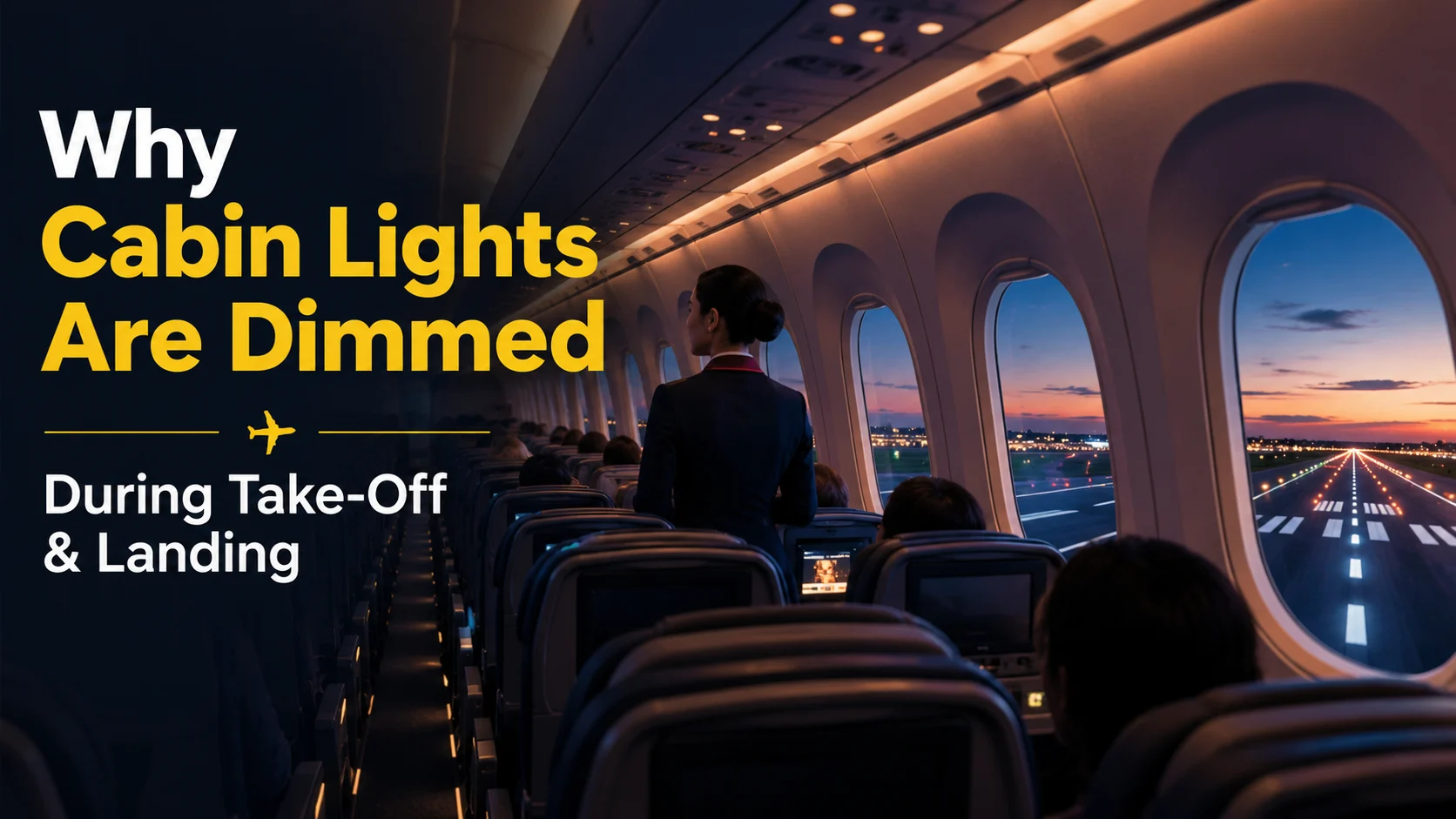
The primary reason why cabin lights are dimmed during take-off and landing is to help passengers’ eyes adjust naturally to the outside lighting conditions. Human eyes require time to adapt when moving between bright and dark environments. If an aircraft experiences an emergency during a night flight and the cabin lights remain bright, passengers may suddenly find themselves looking into complete darkness outside the aircraft after an evacuation. This sudden change can temporarily reduce visibility and slow people’s ability to move safely toward emergency exits. By dimming the cabin lights several minutes before take-off or landing, airlines allow passengers’ eyes to gradually adapt to the lower light levels. As a result, if an emergency evacuation becomes necessary, passengers can see outside the aircraft more quickly and identify escape routes without losing valuable seconds. This adjustment may seem small, but in emergency situations where every second counts, improved night vision can make a significant difference.
The same principle applies during daytime flights, although the lighting adjustments may vary depending on weather conditions and the amount of natural sunlight entering the cabin. Cabin crew carefully manage the cabin environment to maintain visibility while ensuring passengers remain comfortable. During sunset, sunrise, or poor weather conditions, the lighting may be adjusted differently to match the external environment. The goal is always to reduce the contrast between the inside and outside of the aircraft so that passengers’ eyes are already adapted if they need to evacuate. Modern aircraft cabins are designed with advanced LED lighting systems that allow crew members to control brightness levels precisely. These systems are not used only for passenger comfort but also support operational safety during different phases of flight. Airlines around the world follow standard operating procedures that specify when cabin lights should be dimmed, ensuring consistency regardless of the airline or aircraft type.
Another important reason why cabin lights are dimmed during take-off and landing is to help cabin crew monitor conditions both inside and outside the aircraft. When interior lights are slightly reduced, reflections on aircraft windows decrease significantly. This allows cabin crew members to observe the wings, engines, landing gear, and surrounding environment more clearly. If there is smoke, fire, fuel leakage, abnormal engine activity, or any unusual condition outside the aircraft, the crew can identify it more quickly and immediately inform the pilots. Faster detection allows the flight crew to make better decisions during situations where time is critical. In addition, reduced reflections help passengers seated near the windows notice any unusual events outside the aircraft, which may also assist crew members in identifying developing problems. This simple adjustment demonstrates how even small changes inside the cabin contribute to a much larger safety strategy followed throughout the aviation industry.
How Cabin Crew Use Cabin Lighting to Improve Passenger Safety
Cabin crew members are trained extensively to manage the aircraft cabin during every stage of a flight, and adjusting cabin lighting is one of the many safety responsibilities they perform before take-off and landing. Long before passengers notice the lights becoming dimmer, the cabin crew have already completed several important safety checks. They verify that emergency exits are clear, ensure overhead baggage compartments are securely closed, confirm that passengers have fastened their seat belts correctly, and check that seat backs and tray tables are in their proper positions. Once these procedures are complete, the cabin lighting is adjusted according to airline safety protocols. This coordinated sequence ensures that the cabin environment is fully prepared for the most safety-critical moments of the journey.
The dimmed lighting also allows illuminated emergency path lighting installed along the aircraft floor to become much more visible. These emergency lights are specifically designed to guide passengers toward the nearest emergency exit if visibility is reduced because of smoke or darkness. Since these floor lights emit a relatively low level of light, they become easier to see when the main cabin lighting is reduced. In an emergency, passengers naturally tend to look downward while moving through the cabin, making these illuminated pathways an essential part of the aircraft’s evacuation system. Airlines regularly inspect and test these emergency lighting systems to ensure they function correctly during every flight. Combined with the cabin crew’s guidance, these lights help passengers move quickly and safely toward exits without confusion.
Cabin crew training also emphasizes situational awareness, and lighting plays an important role in helping them monitor passenger behaviour. During take-off and landing, crew members observe passengers for signs of anxiety, illness, improper seat belt use, or unsafe behaviour that may require immediate attention. Slightly dimmed lighting reduces distractions while still providing sufficient visibility for the crew to perform these observations effectively. It also creates a calmer cabin environment, encouraging passengers to remain seated and follow crew instructions. Although passenger comfort is not the primary reason behind dimming the lights, the quieter atmosphere often helps reduce stress during these critical phases of flight. Every adjustment made by the cabin crew is carefully planned to support safety, demonstrating that even something as simple as cabin lighting is part of a comprehensive system designed to protect everyone onboard.
How Aviation Regulations and Aircraft Design Support This Safety Practice
Understanding why cabin lights are dimmed during take-off and landing becomes even more interesting when you look at the strict aviation regulations that govern commercial flights. Every airline operates under safety guidelines established by national and international aviation authorities. Organizations such as the International Civil Aviation Organization (ICAO), the Federal Aviation Administration (FAA), and the European Union Aviation Safety Agency (EASA) require airlines to follow standardized operating procedures that prioritize passenger safety above everything else. Although specific lighting procedures may vary depending on the aircraft model, airline, and operating conditions, the objective remains the same: ensuring passengers and crew are prepared for a rapid response if an emergency occurs. Pilots and cabin crew receive extensive training to understand when cabin lighting should be adjusted, how it supports emergency evacuation, and how it fits into the broader safety procedures followed before every take-off and landing.
Modern commercial aircraft are designed with advanced cabin lighting systems that serve much more than an aesthetic purpose. Today’s aircraft use programmable LED lighting capable of producing different brightness levels and colors throughout the flight. While passengers often notice mood lighting during long-haul journeys, these systems are equally important from a safety perspective. During critical flight phases, the lighting can be adjusted instantly to match outside conditions, improving visibility inside the aircraft while reducing glare and reflections on windows. Aircraft manufacturers carefully integrate these lighting systems with emergency floor path lighting, illuminated exit signs, backup power supplies, and evacuation equipment. Even if the aircraft experiences a complete loss of electrical power, emergency lighting systems automatically activate to guide passengers toward the nearest usable exit. Cabin crew are trained to use these systems effectively while directing passengers during emergency evacuations, ensuring that lighting continues to support safe movement even under challenging conditions.
Another reason this procedure is so effective is that it works alongside several other safety measures introduced before take-off and landing. Passengers are asked to fasten their seat belts, return their seats to the upright position, secure tray tables, switch electronic devices to flight mode, and raise window shades. These actions may seem unrelated, but together they create an environment where both passengers and cabin crew can respond quickly if necessary. Open window shades allow crew members to assess external conditions, while dimmed cabin lighting reduces reflections that could obstruct their view. Upright seats create more space for evacuation, secured baggage prevents injuries, and visible emergency floor lighting becomes easier to follow in reduced lighting conditions. Every instruction given by the cabin crew is therefore connected to a carefully planned safety system rather than individual rules. This attention to detail explains why commercial aviation has become one of the safest methods of transportation in the world, with every procedure designed to reduce risk and improve passenger survival in extremely rare emergency situations.
Common Myths About Cabin Lights During Take-Off and Landing
Despite being a routine part of every flight, many myths continue to surround why cabin lights are dimmed during take-off and landing. One of the most common misconceptions is that airlines dim the lights simply to create a peaceful atmosphere or encourage passengers to relax before departure. While a darker cabin may indeed feel more comfortable, relaxation is only a secondary effect. The real purpose remains passenger safety and improved emergency preparedness. Airlines invest significant resources in crew training, aircraft maintenance, and safety equipment, and cabin lighting is another carefully considered element within that larger safety framework.
Another widespread myth suggests that dimming the lights helps the pilots see better. In reality, pilots operate from the cockpit, which has its own independent lighting controls separate from the passenger cabin. Flight deck lighting is adjusted according to the pilots’ operational requirements and does not depend on the brightness inside the passenger cabin. The dimmed lights mainly benefit passengers and cabin crew by improving night vision, reducing reflections, and increasing the visibility of emergency lighting systems. Similarly, some travelers believe that dimmed lighting is intended to save electricity. Although LED lighting systems are energy efficient, the small amount of electricity saved is insignificant compared to the aircraft’s overall power consumption. Safety—not energy conservation—is the primary reason for the procedure.
Many passengers also wonder why cabin lights are sometimes not dimmed during daytime flights. The answer depends on the amount of natural light outside the aircraft. During bright daylight, passengers’ eyes are already adapted to high light levels, so airlines may only reduce the cabin lighting slightly rather than creating a dark environment. During evening departures, night operations, or poor weather conditions, however, more noticeable dimming helps passengers adjust gradually to the darker surroundings. This flexibility demonstrates that airlines adapt cabin lighting according to actual operating conditions rather than following a single fixed rule. Understanding these facts helps passengers appreciate that every action taken by the cabin crew is based on extensive research, aviation regulations, and decades of operational experience rather than convenience or tradition. The next time the lights become dim during take-off or landing, passengers can recognize that this simple adjustment is another layer of protection designed to make air travel even safer.
Conclusion
The answer to why cabin lights are dimmed during take-off and landing is rooted entirely in aviation safety. This simple procedure helps passengers’ eyes adjust to outside lighting conditions, improves the visibility of emergency exit paths, reduces reflections on aircraft windows, and allows cabin crew to monitor both the cabin and the surrounding environment more effectively. It also works together with other important safety measures such as open window shades, secured cabin baggage, upright seat positions, and illuminated emergency floor lighting to ensure everyone onboard is prepared for the unlikely event of an emergency. Modern aircraft are equipped with advanced lighting systems specifically designed to support these procedures, while pilots and cabin crew receive extensive training to implement them correctly on every flight. Although many passengers may view dimmed cabin lights as a minor detail, it represents the aviation industry’s commitment to meticulous planning and continuous improvement in passenger safety. Every announcement, every instruction, and every adjustment made before take-off and landing has a carefully researched purpose. Understanding these procedures not only answers a common travel question but also highlights why commercial aviation continues to maintain one of the highest safety standards among all forms of transportation.
Frequently Asked Questions (FAQs)
1. Why are cabin lights dimmed before take-off?
Cabin lights are dimmed to help passengers’ eyes adapt to outside lighting conditions and improve visibility during an emergency evacuation if one becomes necessary.
2. Are cabin lights dimmed on every flight?
Most airlines dim the lights during night flights and adjust them appropriately during daytime operations based on external lighting conditions and airline procedures.
3. Does dimming the lights help the pilots?
No. Pilots have separate cockpit lighting controls. Cabin lighting is primarily adjusted for passenger safety and to assist the cabin crew.
4. Why are window shades kept open during take-off and landing?
Open window shades allow passengers and cabin crew to observe outside conditions, enabling faster assessment during an emergency and allowing more natural light into the cabin.
5. Is dimming the lights meant to save electricity?
No. The purpose is safety, not energy conservation. Modern aircraft lighting systems consume relatively little power, and the procedure is followed to improve emergency preparedness and passenger visibility.