
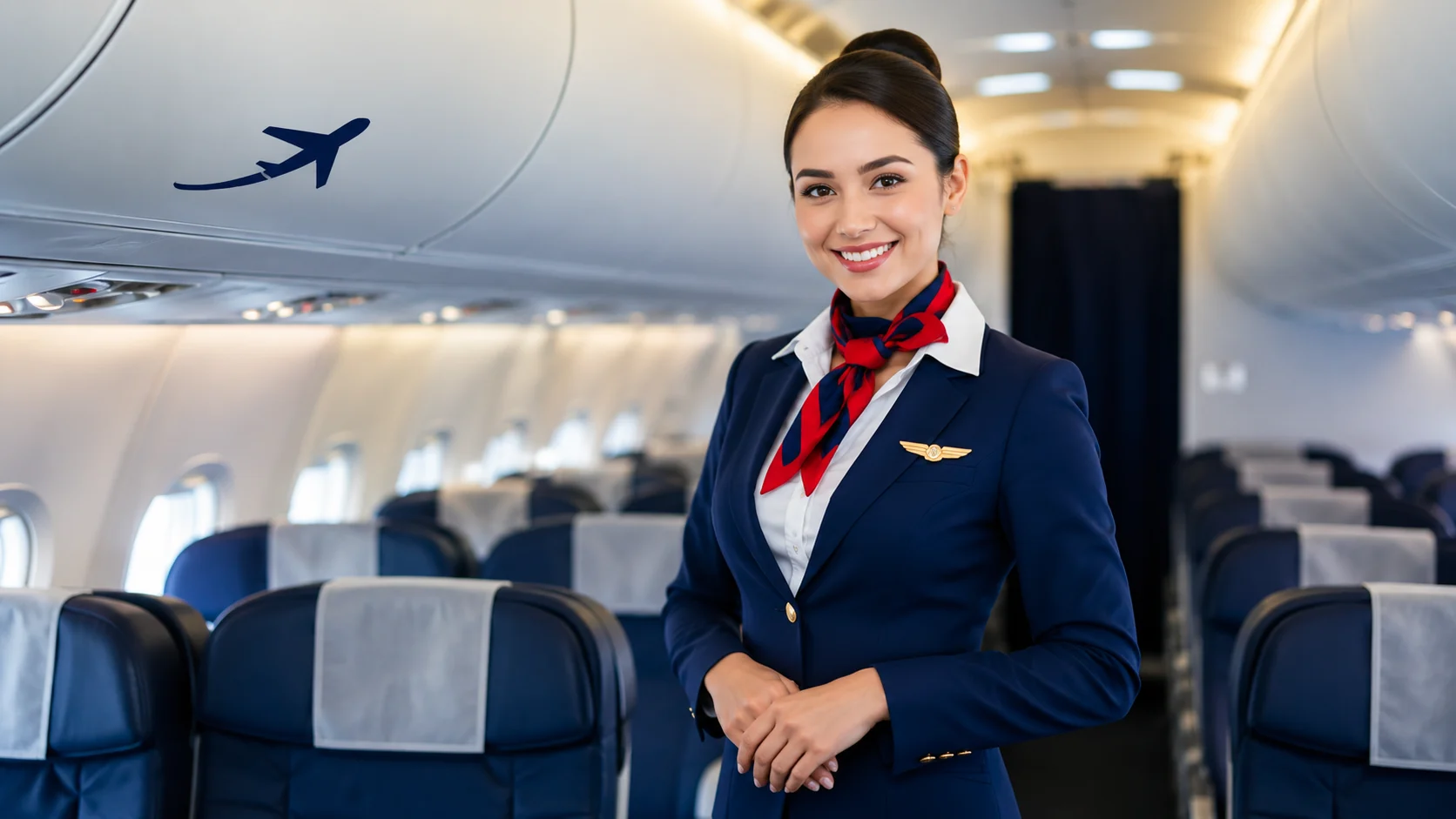
Cabin Crew Roles and Responsibilities : Introduction
Roles and Responsibilities of Cabin Crew Members are often misunderstood by people who believe that cabin crew members only serve food and drinks during a flight. While excellent customer service is certainly an important part of the job, the primary responsibility of every cabin crew member is ensuring the safety and well-being of passengers. Every commercial flight depends on trained cabin crew professionals who are prepared to handle normal operations as well as emergencies. From the moment passengers arrive at the aircraft until everyone safely leaves after landing, cabin crew members remain alert, organized, and ready to respond to any situation. They work closely with pilots, ground staff, and airport authorities to make every journey safe, comfortable, and enjoyable. Understanding their real responsibilities helps students and aspiring aviation professionals appreciate why cabin crew training is so comprehensive and why airlines look for candidates with strong communication, teamwork, and problem-solving skills.
Safety Is the Primary Responsibility of Every Cabin Crew Member
The most important aspect of cabin crew roles and responsibilities is maintaining passenger safety throughout the entire flight. Before passengers board the aircraft, cabin crew members conduct detailed safety inspections inside the cabin. They check emergency exits, fire extinguishers, oxygen bottles, emergency lights, first aid kits, life jackets, communication equipment, and other safety devices to ensure everything is functioning properly. During the pre-flight briefing, the senior cabin crew discusses important information such as weather conditions, flight duration, passenger details, medical cases, and emergency procedures. Once passengers begin boarding, cabin crew members help them find their seats, store cabin baggage correctly, verify that seat belts are fastened, and ensure emergency exits remain unobstructed. Before take-off, they perform the mandatory safety demonstration, explaining how to use seat belts, oxygen masks, life jackets, and emergency exits. During the flight, they continuously monitor the cabin for unusual situations, respond to turbulence, assist passengers who feel unwell, and communicate important updates from the cockpit. In the event of an emergency, cabin crew members are trained to perform aircraft evacuation, administer first aid, manage fire incidents, and coordinate rescue procedures while remaining calm under pressure. Their extensive safety training enables them to make quick decisions that can protect hundreds of lives within minutes, making safety the foundation of the cabin crew profession.
Delivering Exceptional Customer Service Throughout the Journey
Although safety remains the highest priority, delivering outstanding customer service is another major part of cabin crew roles and responsibilities. Every passenger expects a comfortable, pleasant, and professional flying experience, and cabin crew members play a vital role in meeting those expectations. From greeting passengers with a warm smile during boarding to assisting elderly travelers, children, and passengers with special needs, cabin crew members create a welcoming atmosphere on every flight. They answer questions, provide travel information, help passengers locate their seats, distribute meals and refreshments, and ensure that everyone is comfortable during the journey. Strong communication skills are essential because cabin crew interact with people from different cultures, languages, and backgrounds every day. They also handle challenging situations such as delayed flights, seating issues, baggage concerns, or dissatisfied passengers with patience and professionalism. Airlines invest heavily in customer service training because positive passenger experiences build customer loyalty and strengthen the airline’s reputation. A cabin crew member must therefore combine empathy, confidence, professionalism, and excellent interpersonal skills to maintain high service standards while continuing to prioritize passenger safety. Balancing hospitality with operational responsibilities is one of the qualities that distinguishes successful cabin crew professionals from the rest.
Working as a Team and Managing Every Flight Efficiently
Another essential part of cabin crew roles and responsibilities is effective teamwork and operational coordination. A commercial flight is a highly organized operation where every crew member has clearly defined duties before, during, and after the flight. Cabin crew work closely with pilots, airport ground staff, security personnel, maintenance teams, catering services, and air traffic authorities to ensure smooth flight operations. Before departure, they attend crew briefings where responsibilities are assigned and important passenger information is shared. Throughout the flight, cabin crew members communicate constantly with one another to monitor passenger needs, coordinate meal services, manage cabin cleanliness, and respond quickly to unexpected situations. They also complete important documentation related to onboard incidents, medical assistance, security concerns, or passenger feedback. After landing, cabin crew inspect the cabin, ensure all passengers have safely disembarked, report any technical or service issues, and prepare the aircraft for its next journey. This level of coordination requires discipline, leadership, adaptability, and excellent time management. Every successful flight depends on teamwork, where each cabin crew member supports colleagues while maintaining the highest standards of safety and service. Their ability to remain calm, organized, and professional in a fast-paced environment demonstrates why cabin crew members are considered highly skilled aviation professionals rather than simply onboard service staff.
Conclusion
The cabin crew roles and responsibilities extend far beyond serving meals or welcoming passengers onboard. Cabin crew professionals are trained safety experts, customer service ambassadors, emergency responders, and effective team players who contribute significantly to the success of every flight. They protect passengers by conducting safety inspections, demonstrating emergency procedures, managing medical situations, and coordinating evacuations when required. At the same time, they deliver exceptional customer service that enhances the travel experience for people from around the world. Their ability to balance safety, hospitality, communication, and operational efficiency makes cabin crew one of the most respected professions in the aviation industry. If you aspire to build a rewarding career in aviation, understanding these responsibilities is the first step toward appreciating the professionalism, dedication, and extensive training required to become a successful cabin crew member.