Body Language Tips to Succeed in Aviation Interviews:Introduction
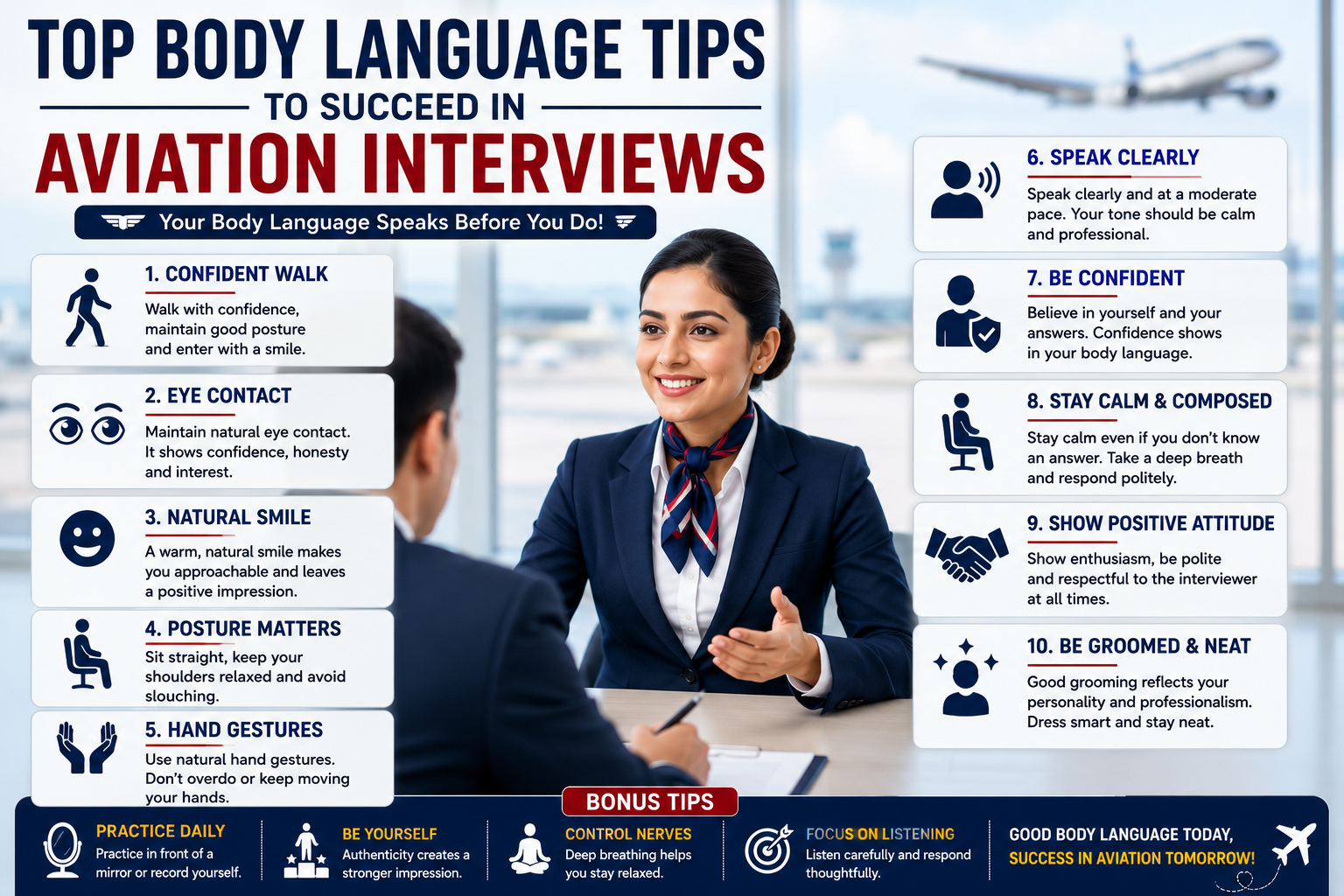
Body Language Tips to Succeed in Aviation Interviews are extremely important for students preparing for airline, airport, cabin crew, or aviation management interviews. In aviation industries, recruiters do not only judge your answers. They also carefully observe how you walk, sit, smile, speak, and react during interviews.
Many freshers prepare technical questions and HR answers but ignore body language completely. This is a major mistake because airlines and airports prefer candidates who appear confident, calm, professional, and customer-friendly.
The aviation industry is highly customer-focused. Employees regularly interact with passengers from different countries and backgrounds. This is why recruiters pay close attention to non-verbal communication during interviews.
According to LinkedIn workplace reports, communication and presentation skills are among the top qualities employers seek in customer-facing industries like aviation and hospitality.
📖 Source: LinkedIn Workplace Learning Report
Good body language can:
- Increase confidence
- Create strong first impressions
- Improve communication
- Make recruiters trust you more
Poor body language can:
- Make you appear nervous
- Reduce confidence levels
- Create negative impressions
- Affect interview performance
In this detailed guide, you will learn the best Body Language Tips to Succeed in Aviation Interviews using simple examples, professional techniques, grooming advice, and aviation interview strategies.
1. First Impressions Matter More Than You Think
One of the most important Body Language Tips to Succeed in Aviation Interviews is understanding the power of first impressions.
In aviation interviews, recruiters start observing candidates from the moment they enter the room. Your:
- Walking style
- Smile
- Eye contact
- Posture
- Handshake
all create immediate impressions.
Imagine two candidates entering an interview room:
- One walks confidently, smiles naturally, and greets politely.
- Another walks nervously, avoids eye contact, and looks uncomfortable.
Even before answering questions, the first candidate creates a stronger impression.
This happens because body language reflects confidence and professionalism.
Here is a simple comparison chart:
| Positive First Impression | Negative First Impression |
|---|---|
| Confident walking | Nervous movement |
| Natural smile | Serious face |
| Eye contact | Looking down |
| Straight posture | Slouching |
| Calm greeting | Weak voice |
According to aviation recruitment studies, recruiters often form opinions within the first few minutes of interaction.
Cabin crew interviews especially focus heavily on:
- Facial expressions
- Confidence
- Smile
- Passenger-friendly personality
Ground staff interviews also evaluate body language because airport employees regularly interact with passengers at counters and boarding gates.
You should enter interview rooms calmly and professionally.
Simple steps include:
- Knock before entering
- Smile politely
- Greet confidently
- Sit only after permission
These small habits can significantly improve your interview impression.
2. Eye Contact and Facial Expressions Build Confidence
Another major part of Body Language Tips to Succeed in Aviation Interviews is learning proper eye contact and facial expressions.
Good eye contact shows:
- Confidence
- Honesty
- Attention
- Professionalism
Poor eye contact may make recruiters feel:
- You are nervous
- You lack confidence
- You are uninterested
However, staring continuously can also feel uncomfortable. The goal is balanced eye contact.
For example:
While answering questions, maintain eye contact naturally for a few seconds, then look away briefly before reconnecting.
Smiling is equally important.
Airlines prefer candidates who look:
- Friendly
- Calm
- Approachable
A natural smile creates positive energy during interviews.
Imagine a passenger asking for help at an airport.
Would they feel more comfortable with:
- A smiling employee
or - An irritated-looking employee?
Obviously, the smiling employee creates a better experience.
This is why recruiters pay close attention to facial expressions.
Here is a helpful chart:
| Good Facial Expressions | Bad Facial Expressions |
|---|---|
| Natural smile | Angry expression |
| Calm face | Nervous face |
| Friendly appearance | Disinterested appearance |
| Relaxed communication | Tense communication |
According to customer service studies, passengers trust employees more when they appear friendly and confident.
You can improve facial expressions by:
- Practicing in mirrors
- Recording mock interviews
- Relaxing before interviews
- Practicing greetings daily
Confidence grows through practice and preparation.
3. Posture and Sitting Style During Aviation Interviews
Another important area in Body Language Tips to Succeed in Aviation Interviews is posture.
The way you sit and stand tells recruiters a lot about your confidence level.
Good posture shows:
- Discipline
- Confidence
- Professionalism
- Attention
Poor posture may make you appear:
- Lazy
- Nervous
- Uninterested
Correct sitting posture includes:
- Sitting straight
- Keeping shoulders relaxed
- Placing hands calmly
- Keeping feet stable
Avoid:
- Slouching
- Leaning excessively
- Crossing arms aggressively
- Constant fidgeting
Here is a posture comparison table:
| Good Posture | Poor Posture |
|---|---|
| Straight back | Slouching |
| Relaxed shoulders | Tense body |
| Calm hand movement | Excessive movement |
| Balanced sitting | Leaning sideways |
Standing posture is also important while entering or leaving interview rooms.
Walk confidently but naturally.
Imagine cabin crew professionals inside aircraft. They usually:
- Stand straight
- Walk confidently
- Maintain calm expressions
Airlines expect interview candidates to display similar professionalism.
According to aviation grooming standards, posture strongly affects passenger perception and employee presentation quality.
Practicing posture daily can improve your confidence naturally.
Simple exercises include:
- Walking slowly with confidence
- Practicing formal sitting
- Maintaining shoulder balance
- Avoiding nervous movements
These habits help create professional body language.
4. Hand Gestures and Voice Control During Interviews
One of the most overlooked Body Language Tips to Succeed in Aviation Interviews is controlling hand gestures and voice tone.
Hand gestures should support communication, not distract from it.
Good hand gestures:
- Look natural
- Support explanations
- Show confidence
Bad hand gestures include:
- Pointing aggressively
- Constant hand movement
- Touching face repeatedly
- Shaking legs nervously
Here is a quick comparison:
| Professional Gestures | Nervous Gestures |
|---|---|
| Calm hand movement | Excessive movement |
| Open posture | Closed arms |
| Controlled gestures | Fidgeting |
| Relaxed speaking | Fast nervous speaking |
Voice tone also matters greatly.
Speak:
- Clearly
- Calmly
- Politely
- Slowly enough to understand
Avoid:
- Speaking too fast
- Mumbling
- Very soft voice
- Aggressive tone
Example:
If an interviewer asks:
“Why do you want to join aviation?”
A calm confident answer sounds much stronger than a rushed nervous answer.
According to workplace communication studies, confident voice delivery increases perceived professionalism during interviews.
You can improve speaking confidence by:
- Reading aloud daily
- Practicing mock interviews
- Recording your voice
- Improving breathing control
Communication and body language work together in aviation interviews.
5. Confidence and Calmness Under Pressure
The final and most important topic in Body Language Tips to Succeed in Aviation Interviews is staying calm under pressure.
Aviation industries involve stressful situations such as:
- Flight delays
- Passenger complaints
- Emergency situations
- Time pressure
Recruiters therefore test emotional control carefully.
If you appear extremely nervous during interviews, recruiters may worry about your ability to handle passenger situations professionally.
One common interview question is:
“How do you handle stress?”
Good Answer:
“I stay calm, focus on solutions, and communicate professionally during stressful situations.”
This answer becomes more powerful when your body language also appears calm.
Signs of calm confidence include:
- Controlled breathing
- Steady voice
- Natural smile
- Relaxed posture
According to Airports Council International, customer experience and emotional interaction are becoming increasingly important in modern aviation industries.
📖 Source: Airports Council International
This is why emotional control matters so much during interviews.
Before interviews:
- Sleep properly
- Reach early
- Practice breathing exercises
- Stay hydrated
These small habits reduce nervousness naturally.
Remember, recruiters do not expect perfection from freshers. They mainly want candidates who appear:
- Trainable
- Positive
- Calm
- Professional
- Customer-friendly
Strong body language helps communicate all these qualities.
Conclusion
Now you clearly understand the best Body Language Tips to Succeed in Aviation Interviews and why non-verbal communication is so important in aviation careers. Airlines and airports carefully observe confidence, posture, facial expressions, eye contact, voice tone, and emotional control during interviews.
Even if your answers are good, poor body language can reduce your interview performance. On the other hand, confident body language can make simple answers sound stronger and more professional.
By practicing posture, improving eye contact, controlling nervous gestures, and maintaining calm confidence, you can greatly improve your chances of clearing aviation interviews successfully.
Remember, body language is not about acting fake. It is about showing your confidence, professionalism, and positive attitude naturally. With regular practice and preparation, you can create powerful first impressions and begin your aviation career journey successfully.