Introduction
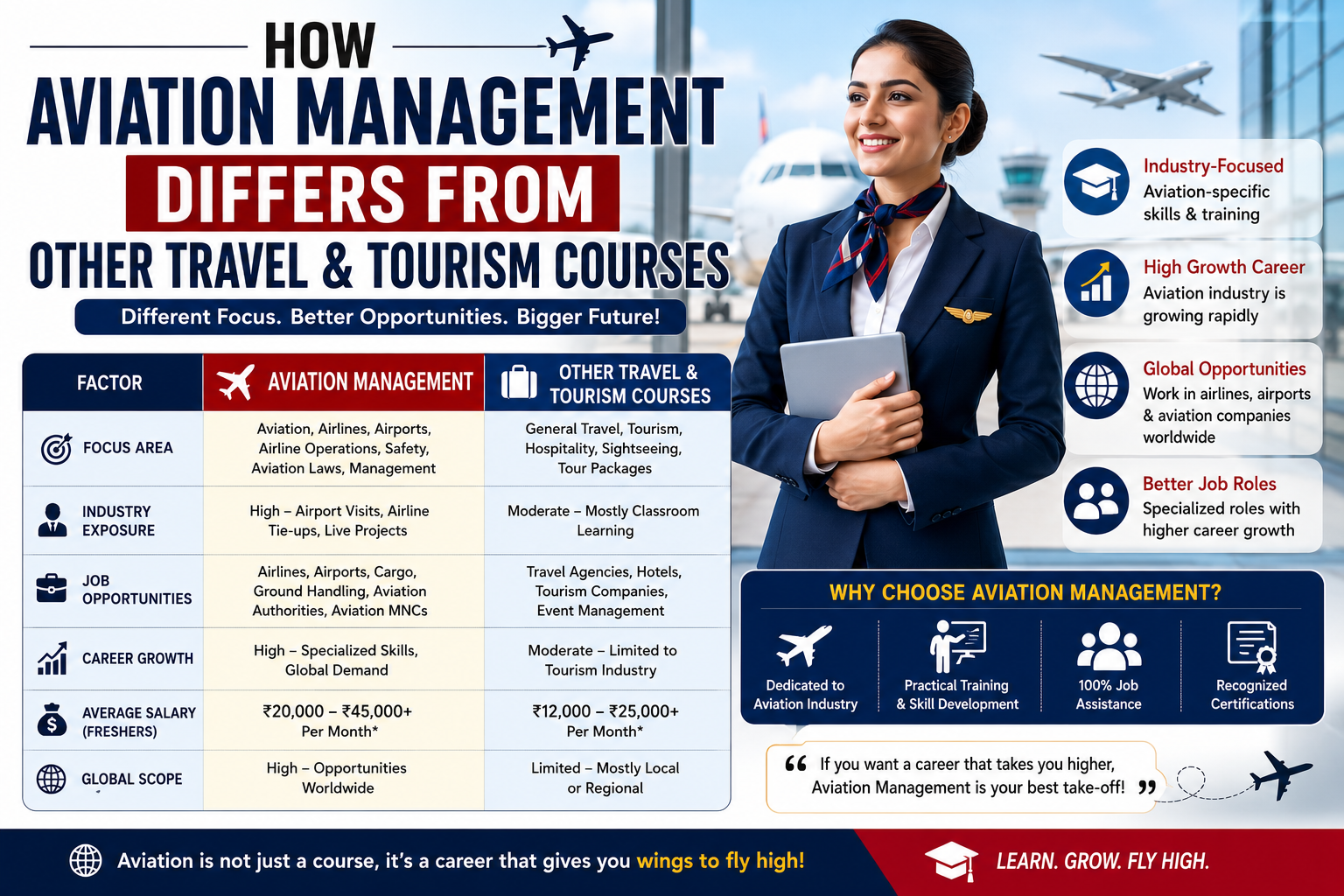
How Aviation Management Differs from Other Travel & Tourism Courses is one of the most common questions students ask after completing Class 12. Many students feel confused because both fields are connected to travel, hospitality, and customer service. However, these two career paths are very different when it comes to subjects, job opportunities, salary, industry growth, and future scope.
Aviation Management mainly focuses on airline operations, airport management, passenger handling, airline customer service, cargo management, and aviation safety. Travel & Tourism courses mainly focus on holiday planning, tourism management, hotel coordination, travel packages, and hospitality services.
Today, the aviation industry is growing faster than ever before. India is becoming one of the world’s largest aviation markets, creating thousands of new jobs every year. According to the Ministry of Civil Aviation, India plans to expand airport infrastructure rapidly in the coming years.
Source: https://www.civilaviation.gov.in
This means aviation students can find exciting opportunities in airports, airlines, logistics companies, and international aviation organizations.
In this detailed guide, you will clearly understand How Aviation Management Differs from Other Travel & Tourism Courses using examples, comparisons, salary data, career insights, tables, and industry statistics.
1. Course Curriculum and Subjects Are Very Different
One of the biggest ways How Aviation Management Differs from Other Travel & Tourism Courses can be understood is by comparing the subjects taught in both programs.
Aviation Management focuses heavily on airport operations and airline systems. Students learn how airlines work, how airports are managed, and how passenger safety is handled. The course prepares students for professional aviation careers.
Common subjects in Aviation Management include:
- Airport Operations
- Airline Management
- Aviation Safety
- Cargo Handling
- Passenger Service Management
- Aviation Law
- Airline Ticketing
- Ground Operations
Travel & Tourism courses focus more on tourism businesses and hospitality services.
Common subjects in Travel & Tourism include:
- Tour Planning
- Hospitality Management
- Tourism Marketing
- Hotel Coordination
- Event Management
- Cultural Tourism
- Travel Agency Operations
Here is a simple comparison chart:
| Aviation Management | Travel & Tourism |
|---|---|
| Airport operations | Tour operations |
| Airline management | Travel package planning |
| Passenger handling | Tourism marketing |
| Aviation safety | Hospitality services |
| Cargo logistics | Hotel coordination |
Imagine this example.
Aviation Management students may learn how airport staff handle flight delays or manage passenger boarding. Travel & Tourism students may learn how travel agencies create vacation packages for customers.
This shows that aviation is more operational and technical, while tourism is more hospitality-focused.
According to IATA (International Air Transport Association), global air passenger numbers continue to rise every year, increasing demand for aviation professionals.
Source: https://www.iata.org
This is why aviation management courses are becoming increasingly popular among students after Class 12.
Another major difference is the work environment. Aviation professionals often work in airports, airline offices, or cargo terminals. Tourism professionals may work in hotels, resorts, travel agencies, or event companies.
Understanding course curriculum differences helps you choose the right career path based on your interests and strengths.
2. Career Opportunities and Job Roles Compared
Another important point in understanding How Aviation Management Differs from Other Travel & Tourism Courses is comparing career opportunities.
Aviation Management offers specialized careers connected to airlines and airports.
Popular aviation job roles include:
- Airport Operations Executive
- Ground Staff Executive
- Airline Customer Service Executive
- Cargo Supervisor
- Aviation Manager
- Flight Dispatcher
- Passenger Service Agent
Travel & Tourism careers are more connected to travel planning and hospitality industries.
Popular tourism job roles include:
- Travel Consultant
- Tour Planner
- Hotel Executive
- Event Coordinator
- Reservation Executive
- Tourism Manager
Here is a detailed comparison table:
| Aviation Careers | Tourism Careers |
|---|---|
| Airline operations | Travel agencies |
| Airport management | Hotel management |
| Cargo logistics | Tour planning |
| Passenger handling | Event coordination |
| Airline customer support | Tourism marketing |
Aviation jobs are often considered more stable because air travel demand continues to increase globally.
According to Airbus Global Forecast reports, India will require thousands of new aircraft and aviation professionals over the next 20 years.
Source: https://www.airbus.com/en/products-services/commercial-aircraft/market/global-market-forecast
This means more hiring opportunities for aviation students.
Tourism jobs can sometimes depend heavily on travel seasons and global tourism trends. During difficult situations like pandemics, tourism industries may face more challenges compared to airport operations.
For example, airports still require operational staff for logistics and cargo management even when tourism slows down.
Aviation careers also provide international exposure. Many professionals work with global airlines and international passengers daily.
If you enjoy structured environments, airport operations, teamwork, and customer service, aviation management may be a stronger career option for you.
3. Salary, Industry Growth, and Future Scope
Salary and future opportunities are another major reason why students want to understand How Aviation Management Differs from Other Travel & Tourism Courses.
Aviation careers often offer better starting salaries because airport operations require high responsibility and specialized training.
Here is a salary comparison for freshers in India:
| Role | Average Fresher Salary |
|---|---|
| Aviation Ground Staff | ₹25,000 – ₹40,000/month |
| Airline Customer Service | ₹30,000 – ₹45,000/month |
| Travel Consultant | ₹15,000 – ₹25,000/month |
| Tourism Executive | ₹18,000 – ₹30,000/month |
Salary growth in aviation can also happen faster because airlines continue expanding routes and airport infrastructure.
According to the Ministry of Civil Aviation, India aims to become one of the largest aviation markets globally.
Source: https://www.civilaviation.gov.in
The government’s UDAN scheme is also helping smaller cities connect through airports, increasing aviation job demand.
Tourism careers also offer growth opportunities, especially in luxury hospitality and international tourism sectors. However, aviation often provides more structured career progression.
Aviation professionals can grow into:
- Airport Managers
- Airline Operations Managers
- Aviation Safety Supervisors
- Cargo Managers
Tourism professionals may grow into:
- Tourism Directors
- Hotel Managers
- Event Management Specialists
Another major difference is industry technology.
Aviation industries use:
- Automated check-in systems
- Airport security technologies
- Airline reservation systems
- Cargo tracking systems
This creates additional demand for skilled aviation professionals.
According to Airports Council International, passenger traffic worldwide is expected to continue growing strongly in the coming years.
Source: https://aci.aero
This makes aviation one of the fastest-growing career sectors for young students.
4. Skills Required in Aviation Management vs Tourism Courses
The skills taught in both industries also explain How Aviation Management Differs from Other Travel & Tourism Courses.
Aviation Management focuses strongly on discipline, communication, operational efficiency, and customer service.
Important aviation skills include:
- Communication Skills
- Passenger Handling
- Crisis Management
- Teamwork
- Leadership
- Time Management
- Operational Coordination
Travel & Tourism focuses more on:
- Tourism Marketing
- Hospitality Skills
- Travel Planning
- Customer Relationship Management
- Event Coordination
Here is a comparison chart:
| Aviation Skills | Tourism Skills |
|---|---|
| Airport operations | Tour planning |
| Crisis handling | Hospitality management |
| Airline coordination | Tourism sales |
| Passenger management | Event organization |
| Time-sensitive work | Customer entertainment |
Imagine an airport during a delayed flight.
Aviation staff must manage:
- Passenger complaints
- Flight coordination
- Boarding schedules
- Security procedures
Now imagine a tourism company.
Tourism professionals may focus more on:
- Hotel bookings
- Travel itineraries
- Vacation planning
- Customer holiday experiences
This clearly shows aviation requires more operational decision-making and high-pressure management.
According to LinkedIn workplace reports, communication and customer service skills are among the top qualities employers seek in aviation industries.
Source: https://learning.linkedin.com/resources/workplace-learning-report
Aviation management courses prepare students for these real-world operational situations.
If you enjoy fast-moving environments and solving real-time challenges, aviation management may suit your personality better.
5. Which Career Path Is Better for You?
The final part of understanding How Aviation Management Differs from Other Travel & Tourism Courses is deciding which career path matches your goals.
You should choose Aviation Management if:
- You enjoy airports and airlines
- You like structured work environments
- You want stable long-term growth
- You enjoy customer interaction
- You can work in shifts
- You enjoy fast-paced operational work
You should choose Travel & Tourism if:
- You enjoy vacation planning
- You love tourism and hospitality
- You enjoy event coordination
- You prefer hotel or tourism industries
- You enjoy travel package management
Here is a quick comparison:
| Best For Aviation | Best For Tourism |
|---|---|
| Airport careers | Hotel careers |
| Airline operations | Vacation planning |
| Logistics & operations | Hospitality services |
| Structured systems | Creative travel experiences |
Both industries offer exciting opportunities. However, aviation management currently offers stronger growth because of rapid airport expansion and rising air travel demand.
India’s aviation sector is expanding rapidly, and airlines continue hiring freshers for ground staff, customer service, airport operations, and management roles.
This makes aviation management one of the most attractive career choices for students after Class 12.
You can also explore related topics like:
- Aviation Management careers after 12th
- Airport Ground Staff interview preparation
- Cabin Crew career opportunities
- Aviation job interview questions
- Airport customer service careers
These related topics can help you understand aviation industries even better.
Conclusion
Now you clearly understand How Aviation Management Differs from Other Travel & Tourism Courses and why many students are choosing aviation careers today. Aviation Management focuses more on airport operations, airline systems, passenger handling, logistics, and aviation safety. Travel & Tourism courses focus more on travel planning, hospitality, hotels, and tourism services.
Both career paths are exciting, but aviation management currently offers stronger industry growth, better salary opportunities, and increasing global demand. India’s aviation sector is expanding rapidly with new airports, airline routes, and aviation technologies.
If you enjoy fast-paced environments, customer interaction, teamwork, and airport operations, aviation management can become a rewarding career for you.
The most important step is choosing a career that matches your personality, interests, and long-term goals. With proper training, communication skills, and confidence, you can build a successful future in the aviation industry.