Crack an Aviation Job Interview: Introduction
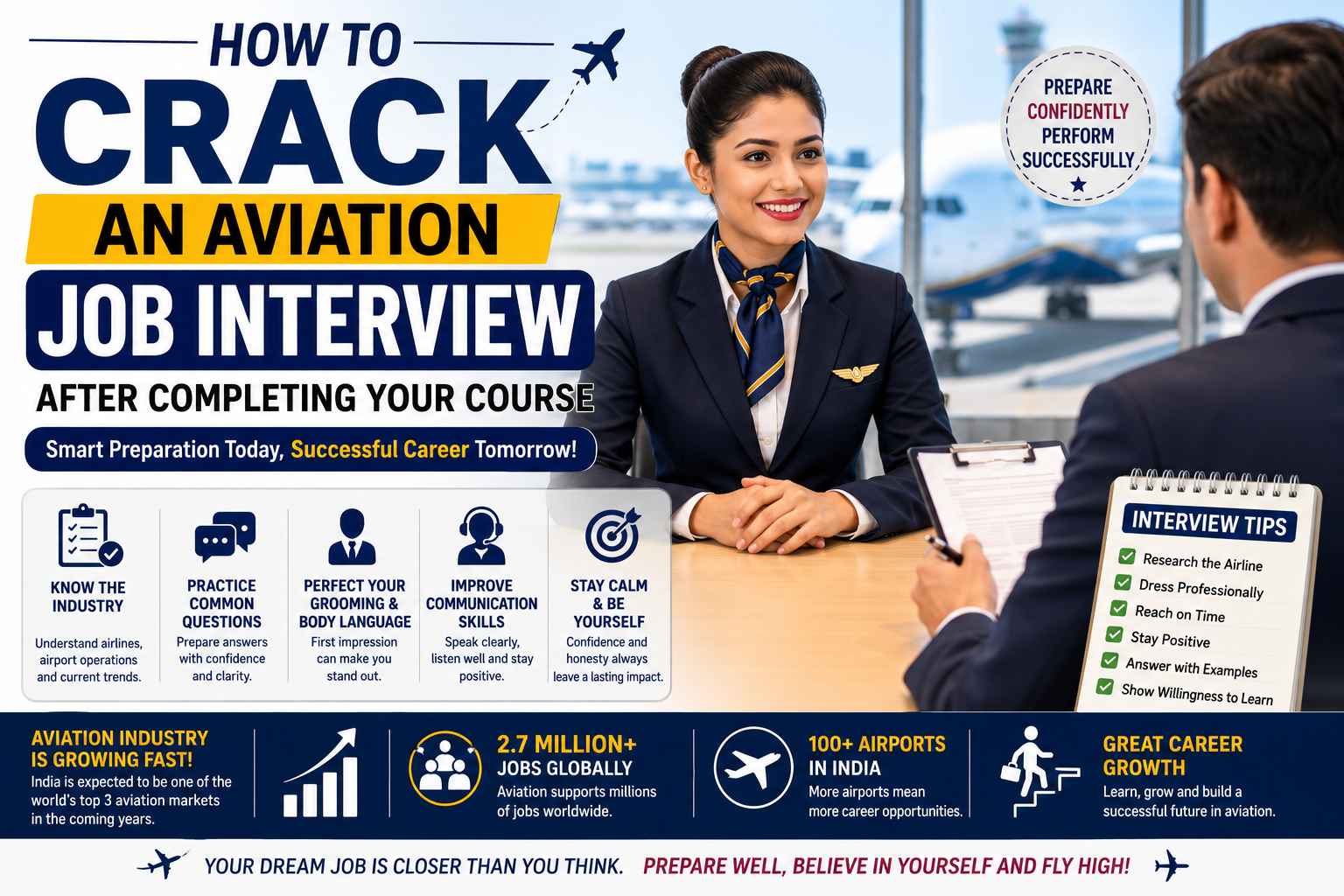
How to Crack an Aviation Job Interview is one of the biggest questions students ask after completing an aviation management, cabin crew, or airport ground staff course. Many freshers dream of working in airlines or airports, but they often feel nervous before interviews. Some students have good qualifications but still fail interviews because they are not properly prepared.
The aviation industry is highly professional. Airlines and airports do not only check your educational qualifications. They also test your confidence, communication skills, personality, grooming, customer service attitude, and ability to stay calm under pressure.
India’s aviation industry is growing rapidly. According to the Ministry of Civil Aviation, India is expected to become one of the world’s largest aviation markets in the coming years. New airports, airlines, and aviation companies are creating thousands of job opportunities for freshers every year.
📖 Source: Ministry of Civil Aviation India
This means you have a great chance to build a successful aviation career if you prepare correctly. In this detailed guide, you will learn exactly How to Crack an Aviation Job Interview using simple techniques, real examples, interview strategies, and industry insights. Whether you want to become cabin crew, airport ground staff, customer service executive, or aviation manager, these tips can help you succeed.
1. Understand the Aviation Industry Before Attending Interviews
The first step in learning How to Crack an Aviation Job Interview is understanding the aviation industry properly. Many freshers attend interviews without basic industry knowledge. This creates a bad impression.
Interviewers often ask:
“What do you know about the aviation industry?”
You do not need to become an expert, but you should know:
- Basic airline operations
- Airport services
- Customer service importance
- Airline safety standards
- Current aviation growth trends
For example, you should know that airports operate 24/7 and employees often work in shifts. You should also understand that aviation jobs require discipline, punctuality, and teamwork.
According to the International Air Transport Association (IATA), billions of passengers travel by air every year globally.
📖 Source: IATA Official Website
This shows how important customer service is in aviation careers.
Imagine this example:
A passenger misses a flight and becomes angry at the airport counter. A professional aviation employee must stay calm, explain policies politely, and help the passenger find solutions.
This is why aviation companies prefer candidates with:
- Good communication skills
- Positive attitude
- Emotional control
- Professional behavior
You should also research the airline before interviews.
Learn:
- Airline history
- Services
- Destinations
- Company values
If you are attending an interview for IndiGo, Air India, or another airline, knowing company details can impress recruiters.
Here is a useful comparison table:
| Prepared Candidate | Unprepared Candidate |
|---|---|
| Knows airline details | Knows nothing about company |
| Understands aviation basics | Confused about role |
| Confident during answers | Nervous and unsure |
| Gives professional responses | Gives random answers |
Understanding the industry helps you answer questions confidently.
2. Practice Common Aviation Interview Questions Daily
The second important step in How to Crack an Aviation Job Interview is practicing interview questions regularly. Most aviation interviews include common personality and customer-service questions.
One of the most common questions is:
“Tell me about yourself.”
Many freshers make mistakes here by giving very long answers.
A better answer is:
“My name is Rahul Sharma. I recently completed my aviation management course. I enjoy communicating with people and want to build my career in the aviation industry. I am hardworking, punctual, and eager to learn.”
This answer sounds professional and confident.
Another common question is:
“Why do you want to join the aviation industry?”
Good Answer:
“I enjoy customer service, teamwork, and professional environments. Aviation gives me opportunities to grow while helping passengers have smooth travel experiences.”
Recruiters also ask:
“What are your strengths?”
You should mention aviation-related strengths like:
- Communication skills
- Teamwork
- Confidence
- Patience
- Problem-solving ability
Example:
“One of my strengths is staying calm during stressful situations.”
A tricky question is:
“What is your weakness?”
Never mention dangerous weaknesses like anger problems or poor punctuality.
Instead, say:
“I used to feel nervous speaking in front of groups, but I am improving through regular practice.”
This answer shows self-improvement.
Here are some common aviation interview questions:
| Interview Question | Purpose |
|---|---|
| Tell me about yourself | Tests confidence |
| Why aviation? | Tests passion |
| How do you handle stress? | Tests emotional control |
| Why should we hire you? | Tests self-confidence |
According to LinkedIn workplace reports, communication skills are among the top qualities employers seek in customer-facing industries.
📖 Source: LinkedIn Workplace Learning Report
Daily practice improves confidence greatly.
3. Grooming and Body Language Can Decide Your Selection
One of the biggest secrets in How to Crack an Aviation Job Interview is understanding the importance of grooming and body language.
In aviation careers, appearance matters because employees represent the airline brand. Recruiters start judging candidates from the moment they enter the interview room.
For boys:
- Wear formal shirts and trousers
- Keep hair neat
- Wear polished shoes
- Maintain proper hygiene
For girls:
- Wear formal professional attire
- Keep makeup light and neat
- Maintain professional hairstyle
- Avoid excessive accessories
Body language is equally important.
Good body language includes:
- Smiling naturally
- Maintaining eye contact
- Sitting straight
- Speaking clearly
Bad body language includes:
- Looking nervous
- Crossing arms
- Avoiding eye contact
- Speaking too softly
Imagine two candidates:
- One enters confidently and smiles politely
- Another looks scared and avoids communication
Most recruiters will naturally prefer the confident candidate.
Here is a comparison chart:
| Good Body Language | Bad Body Language |
|---|---|
| Eye contact | Looking down constantly |
| Natural smile | Serious expression |
| Straight posture | Slouching |
| Calm speaking | Fast nervous talking |
Cabin crew interviews especially focus heavily on personality and presentation.
According to aviation recruitment surveys, first impressions often form within the first few minutes of interviews.
You can improve body language by:
- Practicing in front of mirrors
- Recording mock interviews
- Speaking slowly and clearly
- Improving posture
Confidence is built through preparation and practice.
4. Improve Communication Skills and Customer Service Thinking
Another important factor in How to Crack an Aviation Job Interview is communication ability. Aviation is a customer-focused industry.
Passengers may come from different countries, cultures, and backgrounds. Airlines need employees who can communicate professionally and politely.
Interviewers may ask:
“How would you handle an angry passenger?”
Good Answer:
“I would stay calm, listen carefully to the passenger’s concern, and try to help politely while following airline policies.”
This answer shows:
- Emotional control
- Customer service thinking
- Professionalism
Airlines also test teamwork abilities.
Example Question:
“Can you work under pressure?”
Good Answer:
“Yes, I understand aviation can be fast-paced, and I am comfortable handling responsibilities calmly.”
According to Airports Council International, passenger experience is becoming one of the top priorities for airports globally.
📖 Source: Airports Council International
This is why communication skills matter so much.
You should practice:
- Basic English speaking
- Professional greetings
- Polite communication
- Listening carefully
Even simple improvements can increase your interview performance greatly.
5. Final Preparation Tips Before Your Aviation Interview
The final step in understanding How to Crack an Aviation Job Interview is preparing correctly before interview day.
The night before your interview:
- Prepare documents properly
- Iron your clothes
- Sleep on time
- Research the company again
Carry:
- Resume copies
- Certificates
- Passport photos
- ID proof
Reach the venue early. Punctuality creates a strong first impression.
According to aviation HR professionals, late arrivals immediately create negative impressions because aviation industries value time management very seriously.
You should also avoid:
- Using slang language
- Speaking negatively about previous experiences
- Overconfidence
- Interrupting interviewers
One final important question recruiters ask is:
“Why should we hire you?”
Strong Answer:
“I am hardworking, eager to learn, and passionate about aviation. I believe my communication skills and positive attitude can help me contribute to your company.”
This answer sounds balanced and professional.
Here is a quick preparation checklist:
| Interview Preparation Checklist | Status |
|---|---|
| Resume Ready | ✅ |
| Formal Dress Prepared | ✅ |
| Airline Research Done | ✅ |
| Common Questions Practiced | ✅ |
| Documents Organized | ✅ |
According to Airbus Global Forecast reports, India will need thousands of aviation professionals in the coming decades because of rising passenger demand.
📖 Source: Airbus Global Market Forecast
This means aviation careers have strong future opportunities for prepared students.
Conclusion
Now you clearly understand How to Crack an Aviation Job Interview after completing your course. Success in aviation interviews depends on preparation, communication skills, grooming, confidence, and customer service attitude. Airlines and airports want candidates who can represent the company professionally and handle passengers politely under pressure.
The aviation industry is growing rapidly, creating exciting opportunities for freshers across cabin crew, ground staff, airport operations, and customer service roles. If you prepare properly, practice interview questions daily, improve communication skills, and maintain professional grooming, you can increase your chances of getting selected significantly.
Remember, every successful aviation professional once attended their first interview too. With confidence, preparation, and a positive attitude, you can begin your own exciting aviation career journey.