Soft Skills Matter More Than Degrees in Aviation Careers. When students think about building a career, they often believe that a degree is the most important factor. While education is essential, the reality of the aviation industry is very different. In today’s competitive world, soft skills matter in aviation often matter more than just having a degree.
The aviation industry is built on communication, customer service, teamwork, and quick decision-making. Whether you want to become cabin crew, ground staff, or work in airport operations, your personality and behavior play a major role.
According to industry insights, over 80% of aviation roles are customer-facing, which means professionals must interact with passengers from different cultures, backgrounds, and expectations. This is where soft skills in aviation become the real game-changer.
In this blog, we will explore why soft skills in aviation are more important than degrees, what skills you need, and how they can shape your career.
🔹 1: The Role of Soft Skills in Aviation Careers
The aviation industry is not just about technical knowledge—it is about people. Every day, millions of passengers travel by air, and their experience depends heavily on how they are treated.
This is why soft skills in aviation are considered more valuable than degrees in many roles.
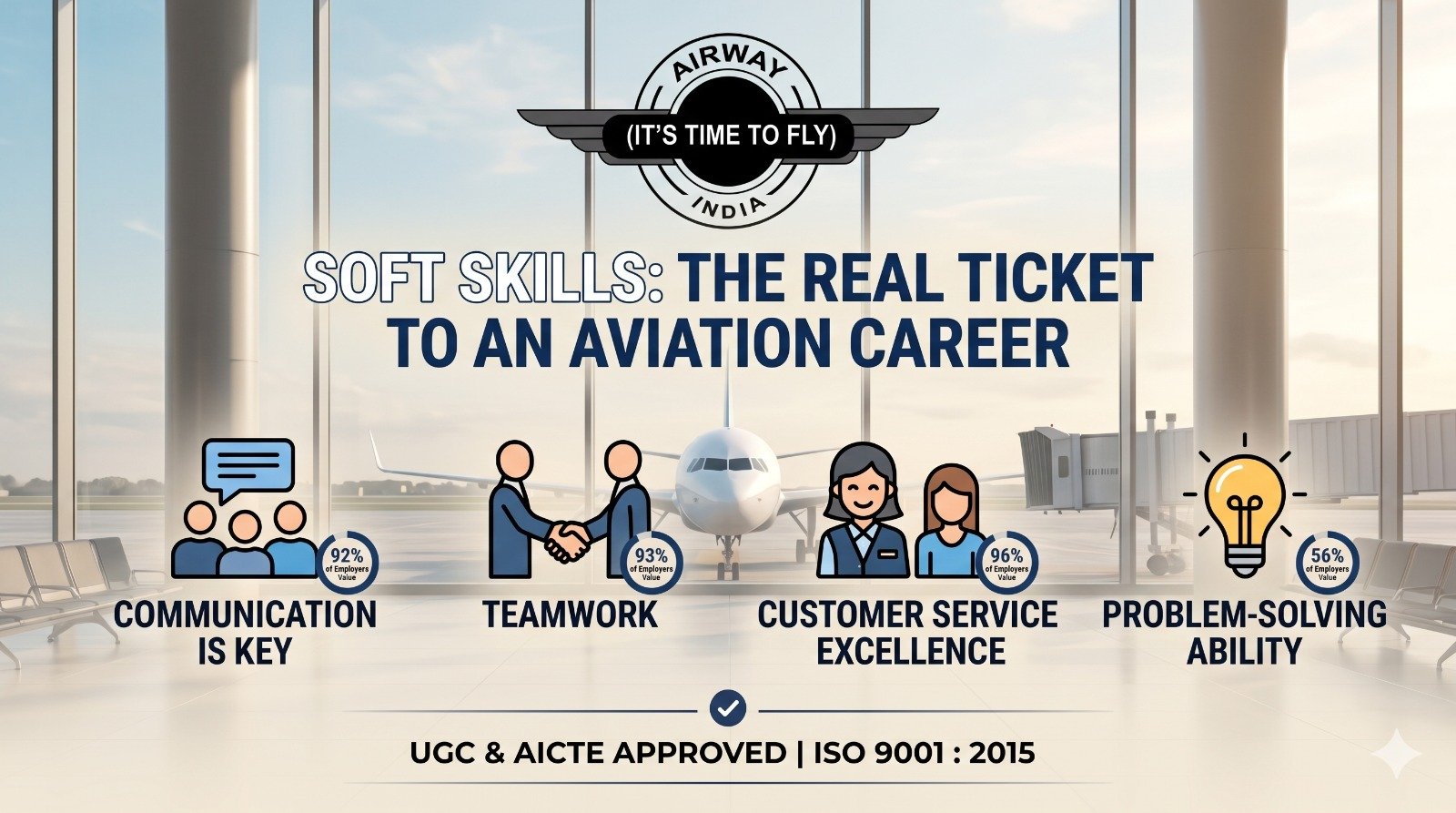
💬 Communication is Key
Clear and confident communication is one of the most important soft skills matter in aviation. Professionals must:
- Guide passengers
- Handle queries
- Manage complaints
Even a small communication mistake can create confusion or dissatisfaction.
🤝 Customer Service Excellence
Airlines focus heavily on passenger experience. A friendly attitude, patience, and empathy are essential soft skills Matter in aviation.
⚡ Problem-Solving Ability
Flight delays, baggage issues, or last-minute changes are common. Employees must think quickly and solve problems calmly.
🌍 Cultural Awareness
Aviation professionals interact with people from around the world. Understanding different cultures is a key part of soft skills in aviation.
This clearly shows that in aviation careers, having strong soft skills Matter in aviation can make you stand out even if your degree is average.
🔹 2: Why Degrees Alone Are Not Enough in Aviation
Many students believe that getting a degree guarantees a job. However, in reality, soft skills Matter in aviation often decide who gets hired.
🎓 Degrees Provide Knowledge, Not Personality
A degree can teach you theory, but it cannot teach:
- Confidence
- Body language
- Real-life communication
These are developed through training and practice, which are essential soft skills matter in aviation.
💼 Hiring Focus Has Changed
Recruiters in aviation jobs after 12th now look for:
- Personality
- Grooming
- Attitude
- Communication skills
Even for entry-level roles, candidates with strong soft skills in aviation are preferred.
🧑✈️ Real-Life Example
Two candidates may have the same qualification, but the one with better communication and confidence will always have an advantage.
📉 Industry Reality
Many graduates struggle to get jobs because they lack practical skills. On the other hand, candidates with strong soft skills Matter in aviation often get selected faster.
📊 Fact: Reports show that 85% of job success comes from soft skills, while only 15% comes from technical knowledge.
This proves that degrees alone are not enough. To succeed in aviation careers, developing soft skills in aviation is essential.
🔹3: How to Develop Soft Skills Matters for Aviation Success
The good news is that soft skills Matters in aviation can be learned and improved with the right approach.
🗣️ Improve Communication Skills
Practice speaking clearly and confidently. You can:
- Join speaking groups
- Practice English daily
- Work on voice tone and clarity
Strong communication is the foundation of soft skills in aviation.
💃 Grooming & Personality Development
In aviation, appearance and behavior matter. Training programs like cabin crew training focus on:
- Professional grooming
- Body language
- Confidence building
🎯 Build Confidence
Confidence comes with practice and exposure. Participate in:
- Group discussions
- Mock interviews
- Public speaking
These activities strengthen your soft skills in aviation.
🤝 Learn Customer Handling
Understanding how to deal with different types of passengers is crucial. This includes:
- Staying calm under pressure
- Showing empathy
- Solving problems quickly
📚 Choose the Right Training Institute
Professional training institutes help students develop both technical knowledge and soft skills in aviation.
By focusing on these areas, you can build strong soft skills in aviation and increase your chances of success.
In today’s aviation industry, success is not just about having a degree—it is about how you present yourself, communicate, and handle situations. This is why soft skills in aviation matter more than ever.
While education provides the foundation, it is your soft skills in aviation that help you grow, get hired, and succeed in your career. Employers are looking for individuals who
can interact confidently, solve problems, and create positive experiences for passengers.
If you truly want to build a successful future in aviation, focus on developing your personality along with your education. Because in the end, it is your soft skills in aviation that will set you apart.
FAQs
1. What are soft skills in aviation?
Soft skills in aviation include communication, teamwork, customer service, and problem-solving abilities.
2. Are soft skills more important than degrees?
In many aviation roles, soft skills in aviation are equally or more important than degrees.
3. Which soft skills are most important in aviation?
Communication, confidence, grooming, and customer handling are key soft skills in aviation.
4. Can I get an aviation job without strong soft skills?
It is difficult, as most aviation roles require strong soft skills in aviation.
5. How can I improve my soft skills for aviation?
You can improve soft skills in aviation through training, practice, and real-life experience.
6. Do aviation courses teach soft skills?
Yes, good aviation courses focus on both technical knowledge and soft skills in aviation.