Air travel may be visible to passengers mainly from the terminal, boarding gate and aircraft cabin, but a large part of an airline’s daily operation happens on the ground. Ground operations connect the aircraft, airport, airline, passengers, baggage, cargo, catering, security and ground service providers into one coordinated process. When these activities are planned and executed properly, an aircraft can be serviced safely, passengers can move efficiently and the flight can depart according to schedule.
For students exploring aviation careers, understanding airport ground handling is particularly useful because ground teams are involved in nearly every stage between an aircraft’s arrival and its next departure. IATA describes ground handling as an integral part of airline operations and highlights safety, on-time performance, standardization, technology and sustainability as major priorities. IATA also reported in 2026 that global passenger numbers were expected to reach about 5.1 billion, underlining the scale of the operational system supporting modern air travel.
1. What Are Ground Operations at an Airport?
Ground operations refer to the activities carried out at an airport to support an aircraft while it is on the ground. These activities can begin before the aircraft reaches the stand and continue until the aircraft is pushed back for departure. Depending on the airport and airline, responsibilities may be handled by airline employees, airport teams, contracted ground handling companies or a combination of these organizations.
The goal is not simply to make an aircraft ready to fly. Ground teams must coordinate multiple processes at the same time while maintaining safety, regulatory compliance, service quality and operational control. An aircraft may need passengers to board, baggage to be loaded, catering to be completed, fuel to be supplied, cabin servicing to be finished and technical or operational checks to be coordinated within a limited turnaround window.
IATA’s ground operations standards include areas such as passenger handling, baggage handling, aircraft general safety and servicing, aircraft turnaround, load control and airside safety oversight. Standardization matters because airlines, airports and ground service providers may work together in different combinations, but the underlying safety and handling procedures need to remain consistent.
Related keywords: airport ground handling, airside operations, ramp operations, aircraft turnaround
- Passenger and gate services
- Baggage and cargo movement
- Ramp and aircraft servicing
- Load control and flight documentation
- Ground Support Equipment (GSE) coordination
- Pushback, towing and departure support
2. Major Functions of Airport Ground Handling
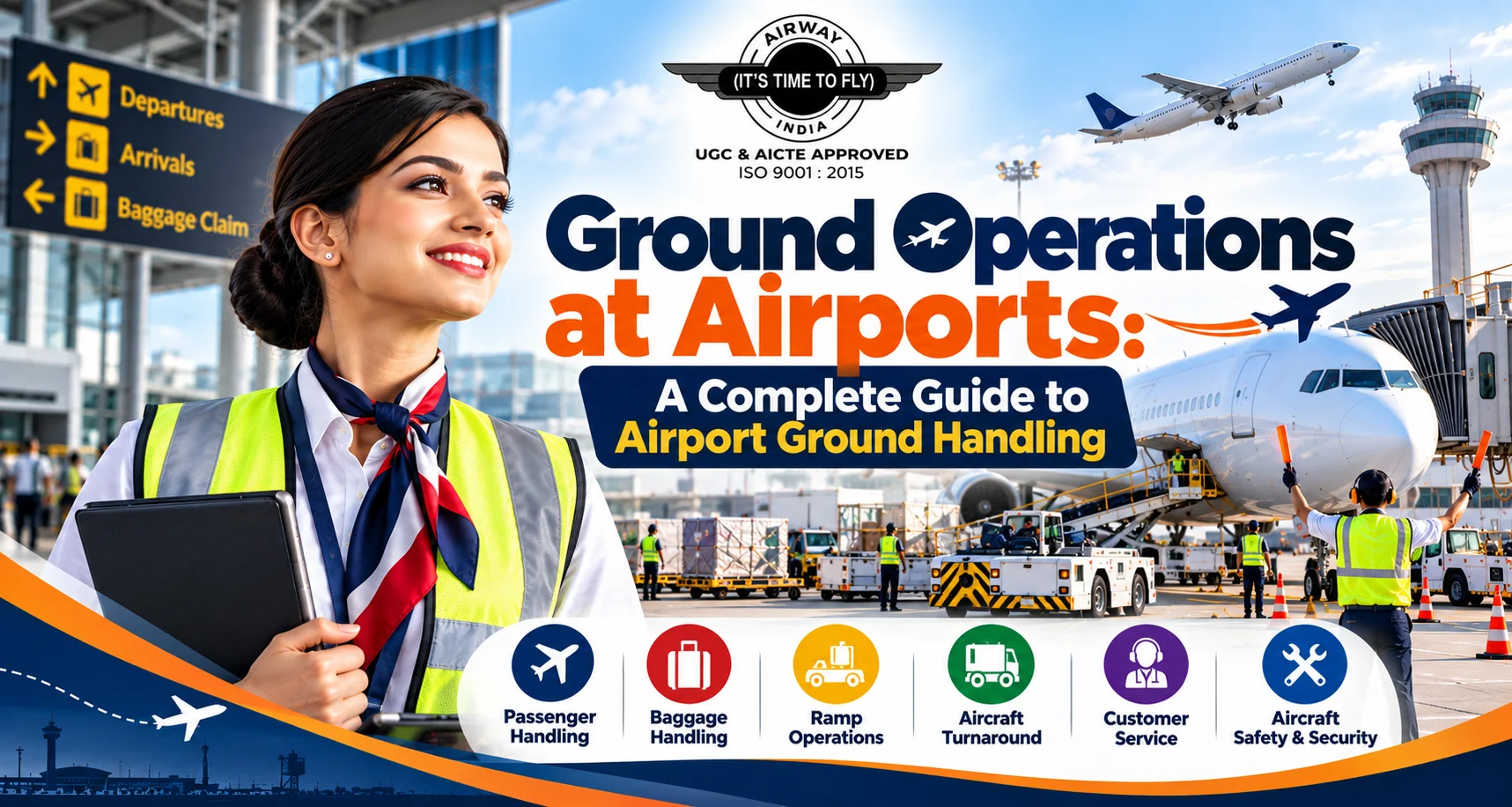
Ground handling is a collection of linked functions rather than a single job. Each function has a specific purpose, but delays or errors in one area can affect the entire flight. Effective ramp operations therefore depend heavily on communication and coordination between teams.
Passenger handling usually includes check-in support, document verification where applicable, gate management, boarding, transfer assistance, arrival services and support for passengers requiring special assistance. These employees work directly with passengers, but their responsibilities also connect to operational systems that communicate passenger and flight information across the airport.
Baggage handling is another major function. Bags must be accepted, sorted, screened through the applicable security process, transported to the correct aircraft and loaded according to operational requirements. On arrival, baggage must be unloaded and transferred to the appropriate reclaim, transfer or onward-processing area. Mishandled baggage can create customer-service problems and operational disruption, making accurate baggage identification and reconciliation important.
Ramp operations happen close to the aircraft and typically involve equipment and personnel moving around a confined operating environment. Tasks may include marshalling or aircraft guidance, chocking, unloading and loading baggage or cargo, catering coordination, cabin service coordination, water and lavatory servicing, ground power connections, air-start or other support functions where applicable, and pushback assistance.
Load control is particularly important because the aircraft must depart with an appropriate distribution of passengers, baggage, cargo, fuel and other weights within approved operational limits. Load control teams work with loading personnel and other operational stakeholders to confirm that the planned load is correctly reflected in the aircraft documentation and systems.
Cargo operations add another layer of complexity. Cargo and mail may require special handling, documentation, security controls, temperature considerations, unit load devices and time-sensitive movement. The exact process depends on the cargo type, aircraft configuration and applicable regulations.
3. How an Aircraft Turnaround Works
Aircraft turnaround is the sequence of ground activities performed between an aircraft’s arrival and its next departure. It is one of the clearest examples of why ground operations require coordination. Multiple teams often work simultaneously, but one team’s progress can affect another team’s ability to complete its task.
Before arrival, the station or turnaround team may review the flight plan, aircraft type, stand allocation, expected passenger load, baggage and cargo information, special handling requirements, service needs and any known operational constraints. Once the aircraft arrives at the stand, teams follow the applicable arrival and safety procedures.
During the turnaround, unloading and loading are coordinated with cleaning, catering, fueling, passenger boarding processes, technical activities and other services. The actual sequence depends on the airport, airline, aircraft type and local procedures. IATA training material emphasizes managing the full turnaround by coordinating resources and processes while maintaining safety and punctuality.
A typical turnaround may include:
- Aircraft arrival, parking and securing procedures
- Passenger disembarkation and transfer activities
- Unloading of baggage and cargo
- Cabin cleaning, catering and servicing
- Fueling and other aircraft services as required
- Loading of baggage, cargo and other approved loads
- Passenger boarding and final operational checks
- Load reconciliation and completion of departure documentation
- Pushback and aircraft departure support
Speed alone is not the objective. A fast turnaround that creates a safety issue or loading error is not a successful turnaround. The operational target is a safe, compliant and well-coordinated departure.
4. Safety, Technology and Equipment in Ground Operations
Safety is at the center of modern ground operations. Aircraft stands contain moving vehicles, machinery, people, aircraft surfaces, fuel and other potential hazards. IATA identifies injuries, aircraft ground damage and load/loading errors among the key ground safety performance areas. It also notes that Ground Support Equipment operations are a major source of aircraft ground damage and has estimated that the annual cost of ground damage could approach $10 billion by 2035 without preventive action.
Ground staff therefore need training not only in their own job function but also in airside awareness, communication, equipment use, emergency procedures and safe working practices. Common occupational injury categories identified by IATA include slips, trips and falls, being struck by objects, lifting or carrying, pushing or pulling and falls from heights.
Ground Support Equipment, commonly called GSE, includes many of the vehicles and machines used to service aircraft. Examples can include baggage tractors, belt loaders, passenger stairs, catering vehicles, ground power units, passenger boarding bridges in fixed facilities, cargo loaders and other specialized equipment.
Technology is increasingly supporting airside operations. Digital load reconciliation, electronic documentation, real-time operational communication, baggage tracking, equipment monitoring and data-driven turnaround management can reduce manual errors and improve visibility. IATA’s operational guidance highlights digital solutions as one way to strengthen load reconciliation and ground safety processes.
Standardization is also important. IATA’s Ground Operations Manual (IGOM) is designed to standardize procedures across airlines, airports and ground handlers, while the Airport Handling Manual (AHM) covers policy and standards across passenger, cargo, aircraft handling, load control, GSE management and training. These frameworks help reduce variation and simplify training.
5. Career Opportunities in Airport Ground Operations
Ground operations offer career paths for people interested in aviation who do not necessarily want to work as pilots or cabin crew. The entry route depends on the employer, role, airport and local regulatory requirements, but many positions value communication ability, teamwork, operational discipline, computer skills and a strong safety mindset.
Common positions include passenger service executive, airport ground staff, ramp agent, baggage operations staff, turnaround coordinator, load control assistant, cargo operations executive, station operations staff and ground handling supervisor. With experience, professionals can move toward team leadership, station management, quality, safety, training or specialized operational roles.
Students preparing for a career in airport ground operations should build knowledge of airport terminology, airline processes, baggage and cargo flows, turnaround coordination, customer service, aviation safety and basic operational documentation.
- Develop strong communication and customer-service skills.
- Understand airport airside and terminal processes.
- Learn the basics of baggage, cargo and aircraft turnaround.
- Become comfortable with operational technology and documentation.
- Build a safety-first approach to every task.
- Gain relevant aviation training and practical exposure where available.
Conclusion
Ground operations are the operational backbone that allows flights to move safely from one destination to another. Passenger services, baggage, ramp activities, fueling, catering, cargo, load control, equipment management and turnaround coordination must work together as one connected system. As passenger demand grows and airports become increasingly technology-driven, the need for trained ground professionals who can combine operational accuracy with strong safety awareness is likely to remain important.
For aviation students, ground handling can provide a broad introduction to airport and airline operations while also creating routes into specialist and supervisory roles. Understanding how the turnaround works, why standardization matters and how ground teams manage safety is a strong foundation for anyone considering an aviation operations career.
Frequently Asked Questions
1. What is ground operations in aviation?
Ground operations are the airport activities that support an aircraft while it is on the ground, including passenger handling, baggage, ramp services, loading, servicing, load control, pushback and related coordination.
2. What is the difference between ground handling and ground operations?
The terms are closely related. Ground handling generally refers to the services provided to an aircraft, passengers and cargo, while ground operations can be used more broadly to describe the overall operational system and coordination of those activities.
3. What is aircraft turnaround?
Aircraft turnaround is the period between an aircraft’s arrival and its next departure. During this time, ground teams coordinate activities such as disembarkation, unloading, servicing, loading, boarding and departure preparation.
4. What is GSE in airport operations?
GSE means Ground Support Equipment. It includes vehicles and equipment used to service aircraft and support airport ground activities, such as baggage tractors, belt loaders and ground power units.
5. Is ground operations a good career option after studying aviation?
Ground operations can provide career opportunities in passenger services, ramp handling, baggage, cargo, load control, turnaround coordination and supervision. Career progression depends on qualifications, employer requirements, operational experience and relevant training.